Inclusion Messages
Safeguarding
Artificial intelligence and safeguarding: what schools need to know now -UPDATED GUIDANCE
The Department for Education has updated its suite of AI in education support materials, adding new modules and significantly expanding the safeguarding content. Developed by the Chiltern Learning Trust and the Chartered College of Teaching in close collaboration with the DfE, it now covers SEND support, school operations, and an expanded safeguarding section.
What's new in the safeguarding content
The guidance now explicitly names cognitive offloading as a safeguarding concern, the risk that pupils defer their thinking to AI rather than developing their own knowledge and skills. This is framed not just as a pedagogical issue but as a safeguarding one, because it can reduce help-seeking from human sources and create conditions where important disclosures are missed.
The guidance also warns directly about emotional attachment to AI chatbots. Some tools are designed in ways that actively encourage pupils to form emotional connections with them. For vulnerable children, this matters: it can substitute for human relationships and bypass the kind of trusted adult contact that sits at the heart of effective safeguarding.
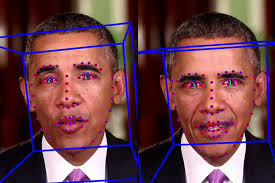 The existing content on deepfakes, AI-generated child sexual abuse imagery, grooming via avatars and chatbots, and AI-assisted extremist content has been retained and reinforced. The guidance confirms that government guidance on incidents involving nudes and semi-nudes applies equally to AI-generated sexualised deepfakes.
The legal picture on nudification
The Crime and Policing Act 2026 has now received Royal Assent. Among its provisions is the criminalisation of the making, adapting, supplying or offering to supply of nudification tools, apps and services that use AI to digitally remove clothing from images of real people. This is the first time the tools themselves, rather than just the images they produce, have been made illegal.
There is currently no date for the nudification offences to become enforceable. Once in force, although the law targets the supply of the tools in the UK, it won't make the tools disappear; and even if they didn't new ones will rapidly appear.
Research published in April 2026 found that Apple listed 18 nudification apps and Google Play had 20, with a combined 483 million downloads and $122 million in revenue. Although both platforms removed apps when researchers identified them, new ones appeared.
This new law of targets apps, browser-based nudification services are not subject to this legislation at all.
Smoothwall's research from March 2026 found that 26.5% of educators had identified instances where students had used AI tools to create CSAM or nude content, and 9.5% had experienced a case of a student creating a fake sexually explicit image of a classmate.
Whilst the legal framework is moving in the right direction, the practical safeguarding risk from nudification tools continues. Schools need to treat this as an active, ongoing risk requiring policy, staff training and pupil education.
Using AI in education - support materials
Inclusion Heroes
 We had an Exams Inspector this week, and he was hugely proud of all the work we do with exams and exam access arrangements. So, I wanted to thank all the staff involved in the huge task.
I also wanted to thank Monika Siek this week for running a training session with staff on neurodiversity. The feedback was positive and well received.
Lastly, a thank you to all staff that attended the SEN focus groups and shared best practice.
Hope you all have a lovely week ahead.
Gurvinder

 Mia's notes

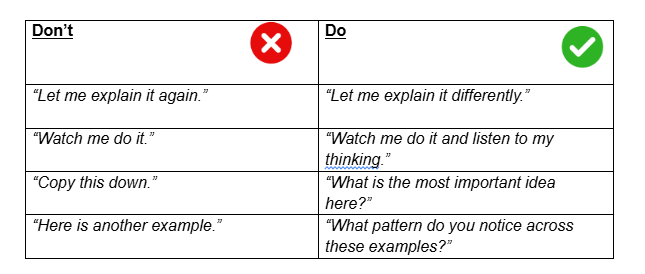
 This week's Bright Spots nominations comes from Adam Bush, who says:
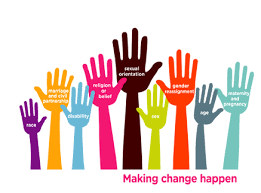 If there are any concerns about Equality and Diversity (staff) at GHS please contact A Johal (DHT)